Deidentify
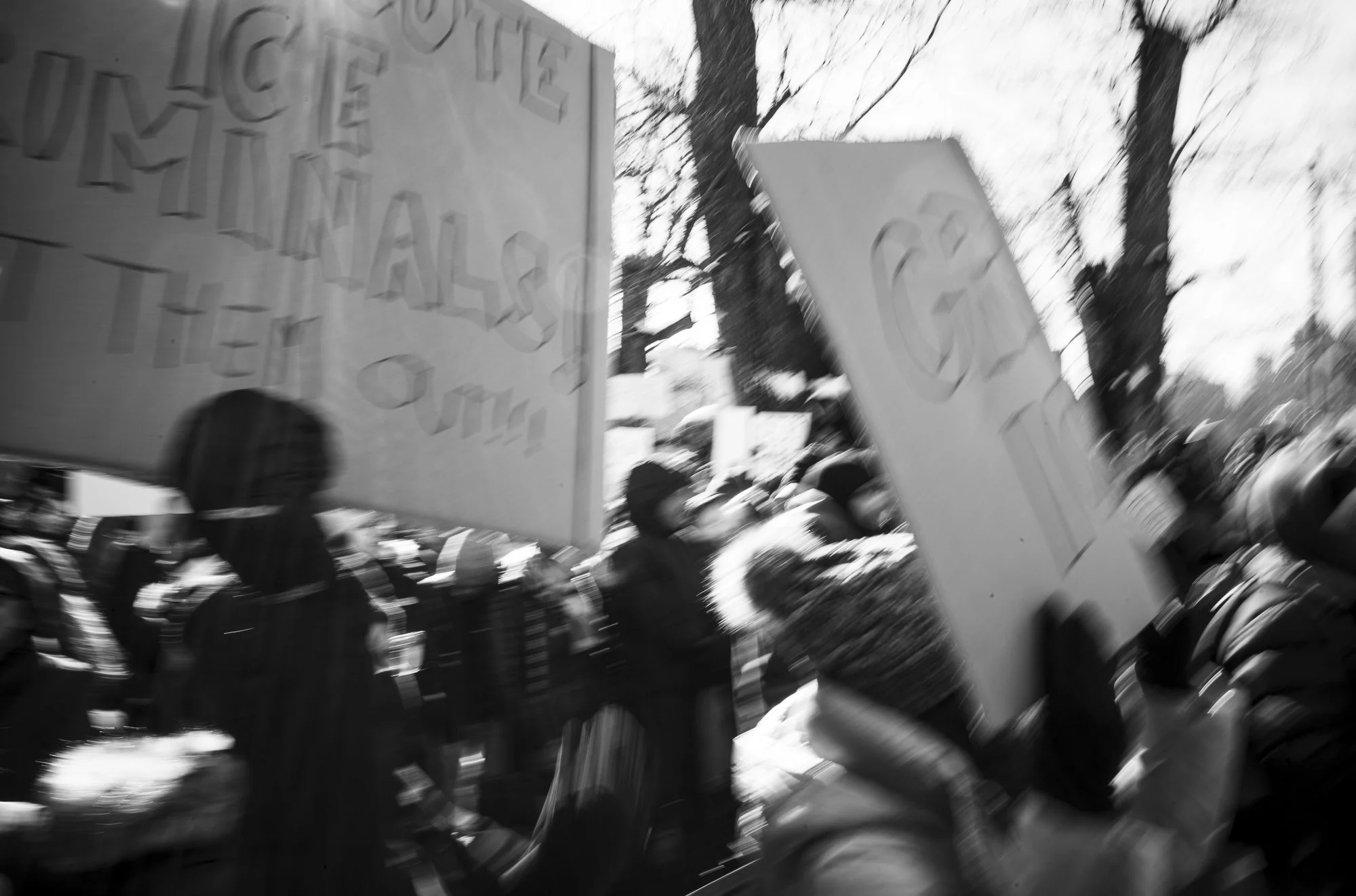
A protest at the Massachusetts State House
Protests, demonstrations, and marches provide fascinating glimpses into human nature and the power of the Zeitgeist. I enjoy being immersed in their energy. At a time of social media saturation and algorithmically generated belief bubbles, demonstrations are among the few places where congregated, live human thought and emotion are on display. They are ideological melting pots in which people with diverse and opposing politics set aside their differences to uphold their shared ideals. In other cases, ideas and emotions can collide. The unvarnished behaviors on display at protests are increasingly difficult to find elsewhere in daily life.
At a December 2026 Sage Sohier book signing and discussion at Palm Press, Sage and contemporaries Jack Louderbooth and Karl Baden discussed the differences between photographing public life today and in the 1970s and 80s, when they made many of their seminal works. They observed that Americans are no longer living in public view. The places they used to photograph — quiet neighborhood streets, public parks, and beaches, and even front porches and back yards — were no longer where American families congregated. While it is unsurprising that Americans are generally more insular today, this change is noticeable in my lifetime. The trend toward increased time at home is so significant that residential architecture has shifted to accommodate families who spend most of their non-working hours indoors, largely watching screens.
Indeed, finding and photographing American life on the streets is growing harder in many places. Demonstrations are exceptions, and present rare opportunities to witness and record impassioned human interaction and emotion. While protests, marches, and other public events are photographically rich environments, they can pose challenges for street photographers. Given the rich subject matter, I am tempted to photograph “the thing itself” — a trap that can lead to documentary-style images that are literal and lack interest beyond the subject. In these cases, I must remind myself to seek out the subjects and settings that offer interesting, indescribable frames.
Given the urgency of today’s politics, it seems appropriate to record these actions if, for nothing else, to bear witness. In the face of rising fears about voicing dissent (a scary topic deserving its own attention and one I will not address here), it seems appropriate to protect protesters' identities while capturing the spirit of the protest. I have seen examples of protest images that use techniques to ‘deidentity’ subjects. While photographing at a recent protest, I slowed the shutter to 1/30, closed the aperture to f16, and moved the camera during the exposure to purposely blur the frame.
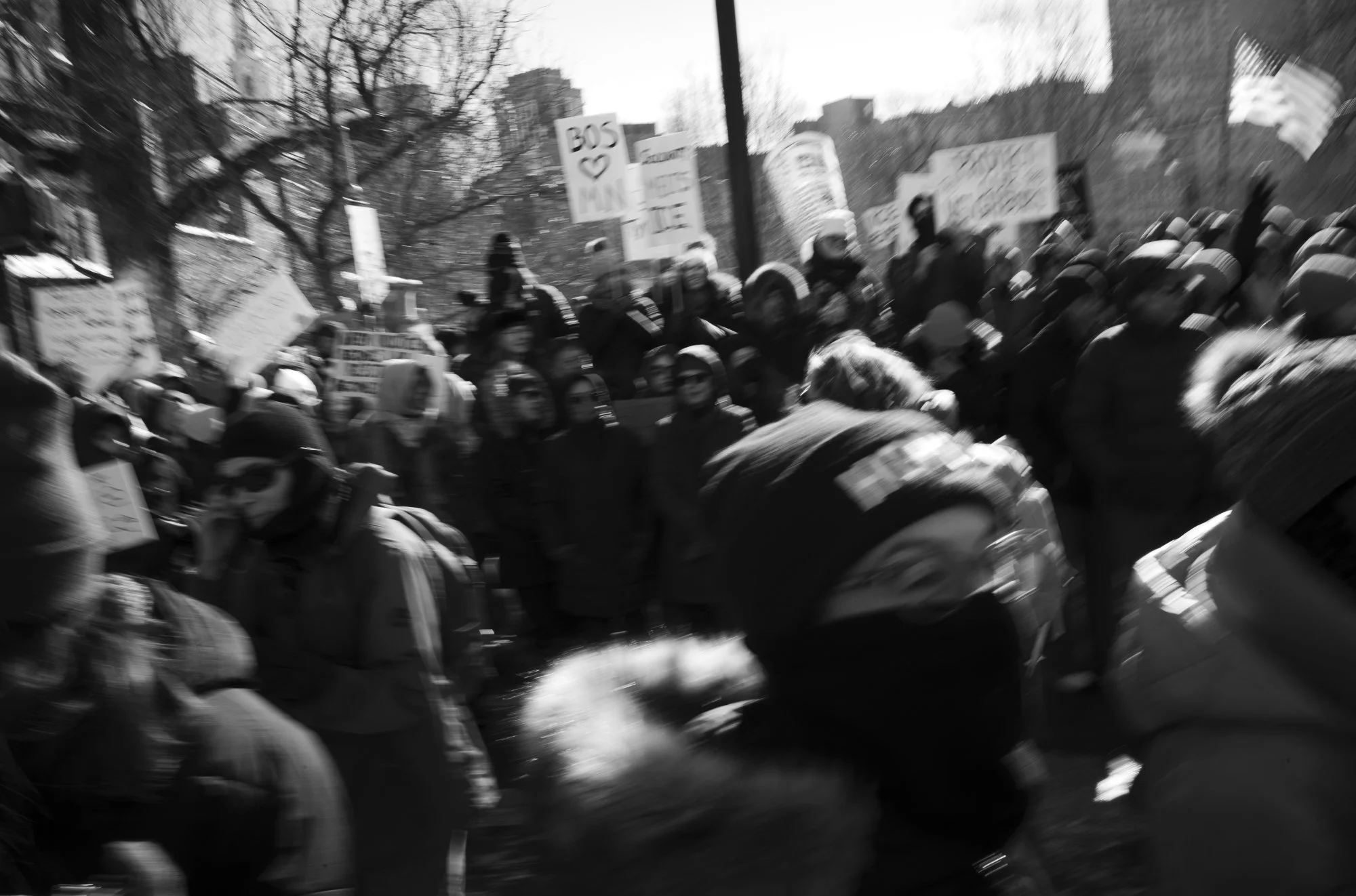
Another experiment with slow shutter
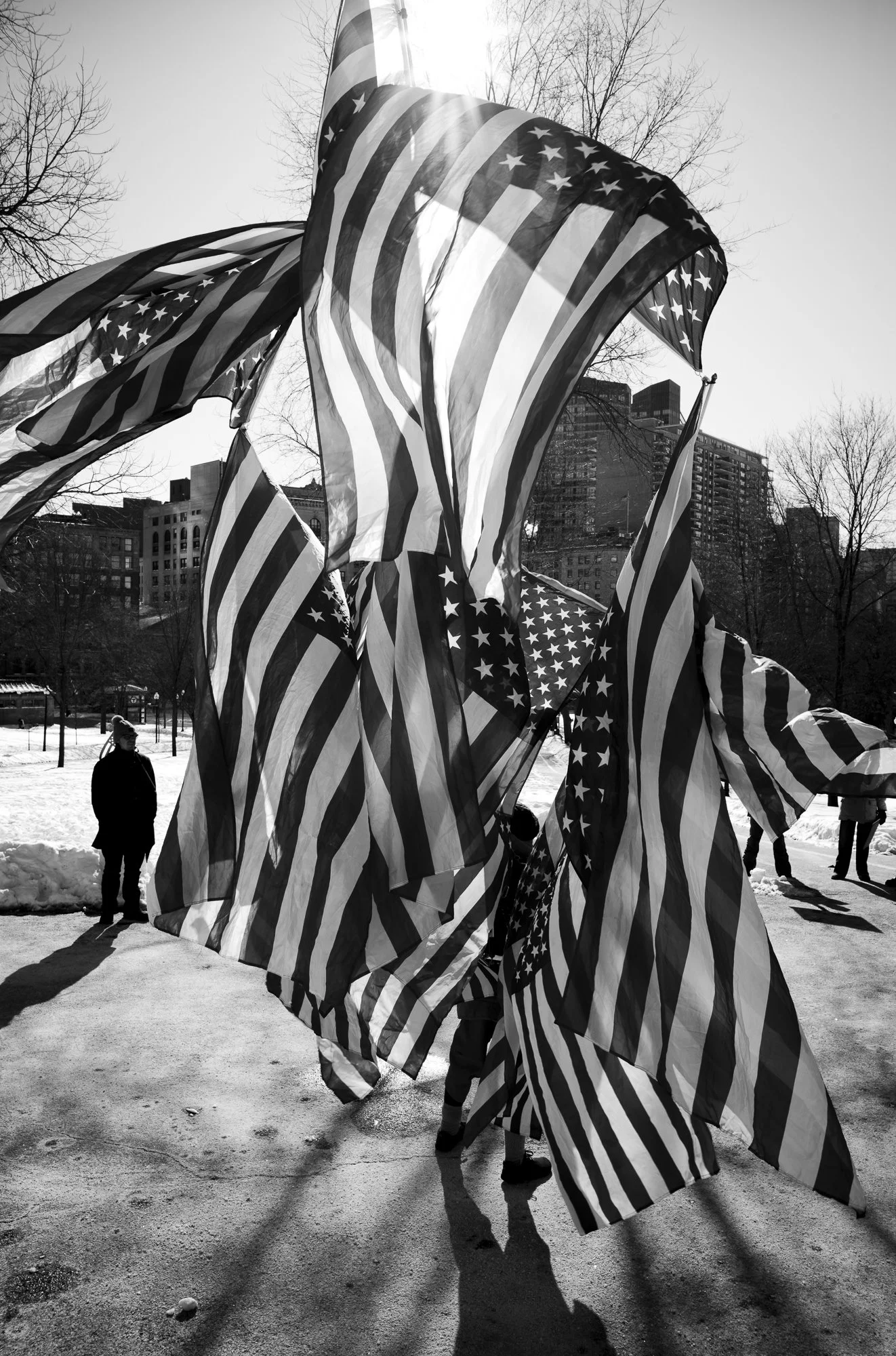
Finding an ambiguous image by looking around the edges of the event.
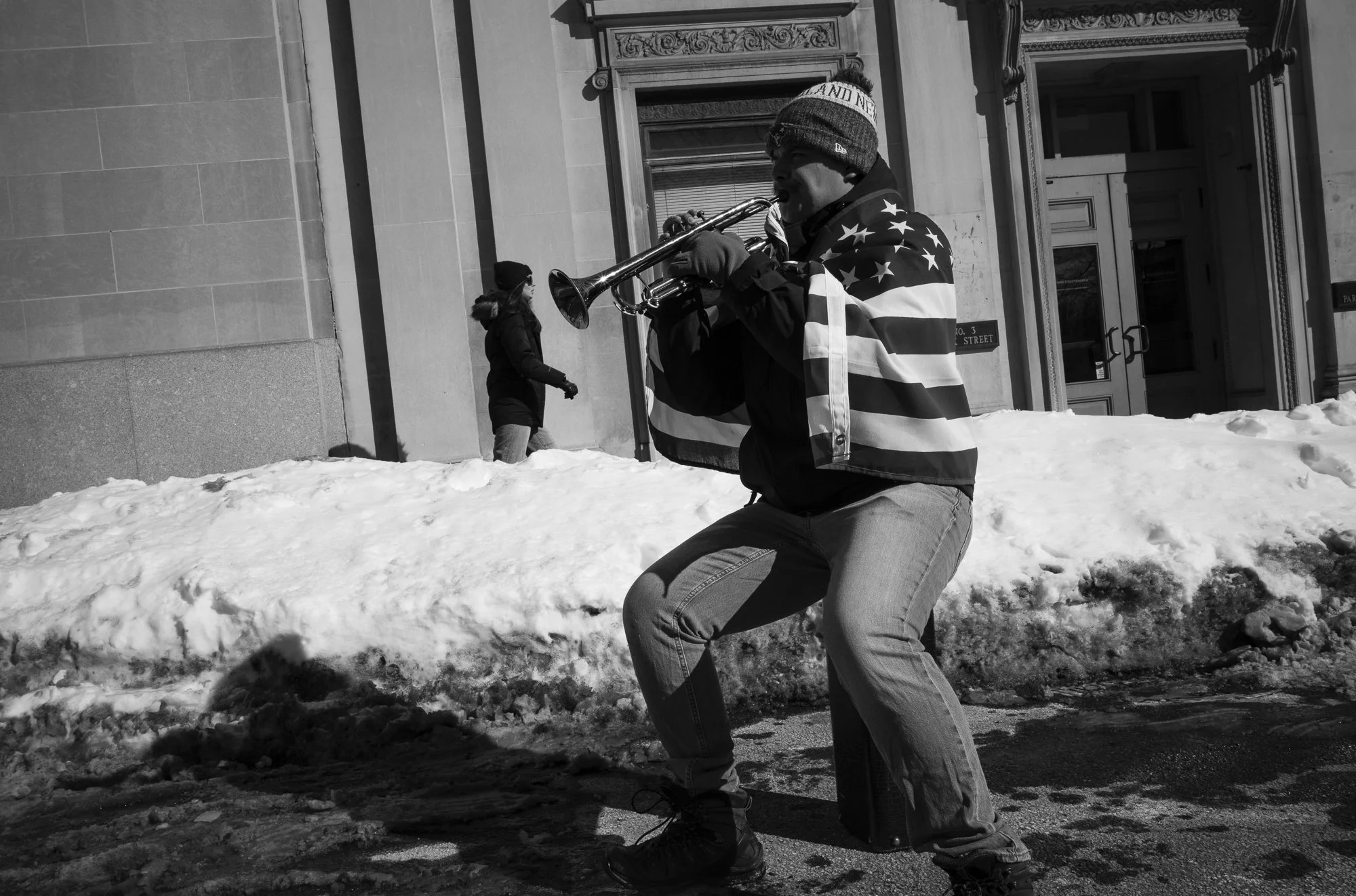
Another discovery around the event’s edges
The blurred images on this page represent successful experiments with obscuring identities in-camera. However, this approach denies the ability to capture life as it happens.
I like the two images at the bottom of this page. While I made several images of the flag carrier, this one obscures the subject enough to leave some questions. The photo of the flag-draped trumpeter is removed from the context of the surrounding demonstration, making it an unusual scene, and one that begs for narrative. The person near the trumpet’s bell adds visual interest and plays with scale.